Paris doesn’t sleep-it just changes its rhythm.
When the sun sets over the Seine, the city doesn’t quiet down. It shifts. The same streets that buzzed with tourists by day now hum with jazz from hidden basements, the clink of wine glasses in dimly lit corners, and the laughter of locals who know where the real magic happens after midnight. Parisian nightlife isn’t about clubs with velvet ropes and bottle service. It’s about atmosphere, history, and a quiet kind of rebellion that’s been perfected over a century.
The cabarets that started it all
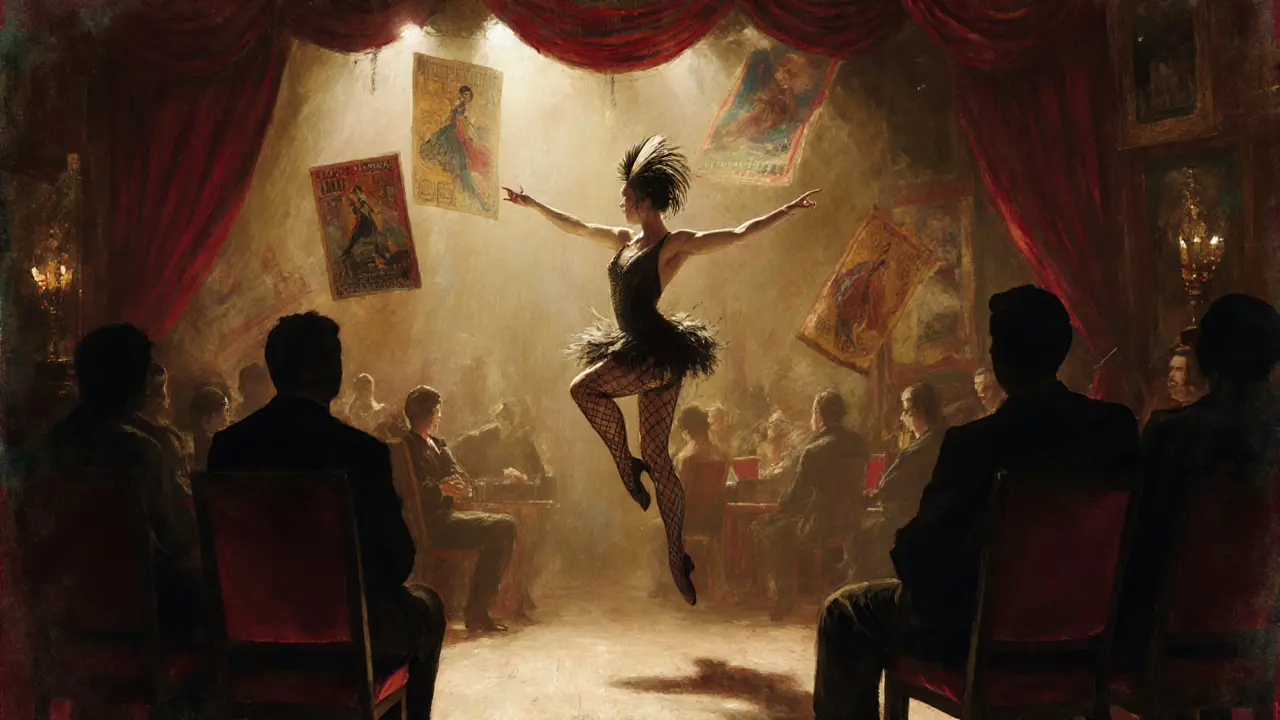
Montmartre’s Moulin Rouge isn’t just a tourist postcard. It opened in 1889, right when the can-can was shaking up polite society. Women in fishnet stockings and feathered headdresses danced on stages lit by gas lamps, turning scandal into spectacle. Today, the show still runs, but the real legacy isn’t the glitter-it’s the spirit. The cabarets of Montmartre didn’t just entertain; they gave voice to artists, writers, and outcasts. Henri de Toulouse-Lautrec painted them. Colette wrote about them. They were the first places in Paris where class lines blurred after dark.
Go beyond Moulin Rouge. Try Le Chat Noir, now a museum-cum-bar with original posters and a basement that still echoes with old music. Or find La Cigale in the 18th arrondissement, where indie bands play under stained glass ceilings. These aren’t reenactments. They’re living rooms for Paris’s creative underbelly.
The café culture that never closes
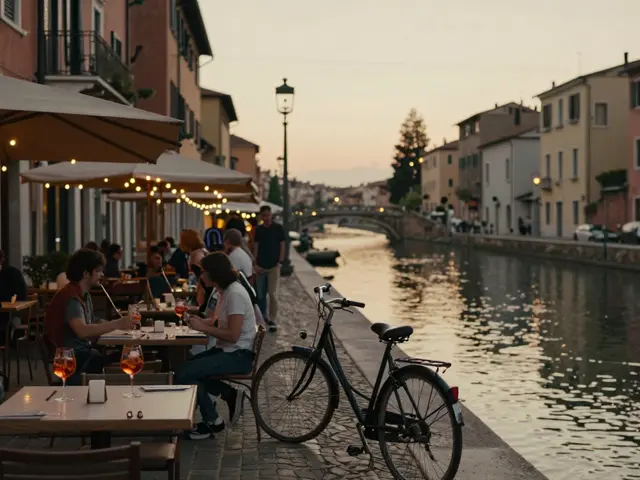
Most people think of Paris cafés as places for morning croissants and newspaper reading. But from the 1920s on, the real action moved to the late-night spots. Places like Café de Flore and Les Deux Magots stayed open past midnight for poets, philosophers, and lovers who didn’t want the night to end. Today, the tradition lives on-but in quieter, less crowded corners.
Head to Café Charbon in the 11th. It’s a former coal shop turned industrial-chic bar. The lights are low, the music is vinyl-only, and the barman knows your name by the third drink. Or try Le Comptoir Général in the 10th, where you’ll find books stacked on shelves, live Afrobeat on Sundays, and a garden lit by fairy lights. These aren’t bars. They’re third spaces-between home and work-where time slows down.
Wine bars: the quiet heartbeat of Paris after 11 PM
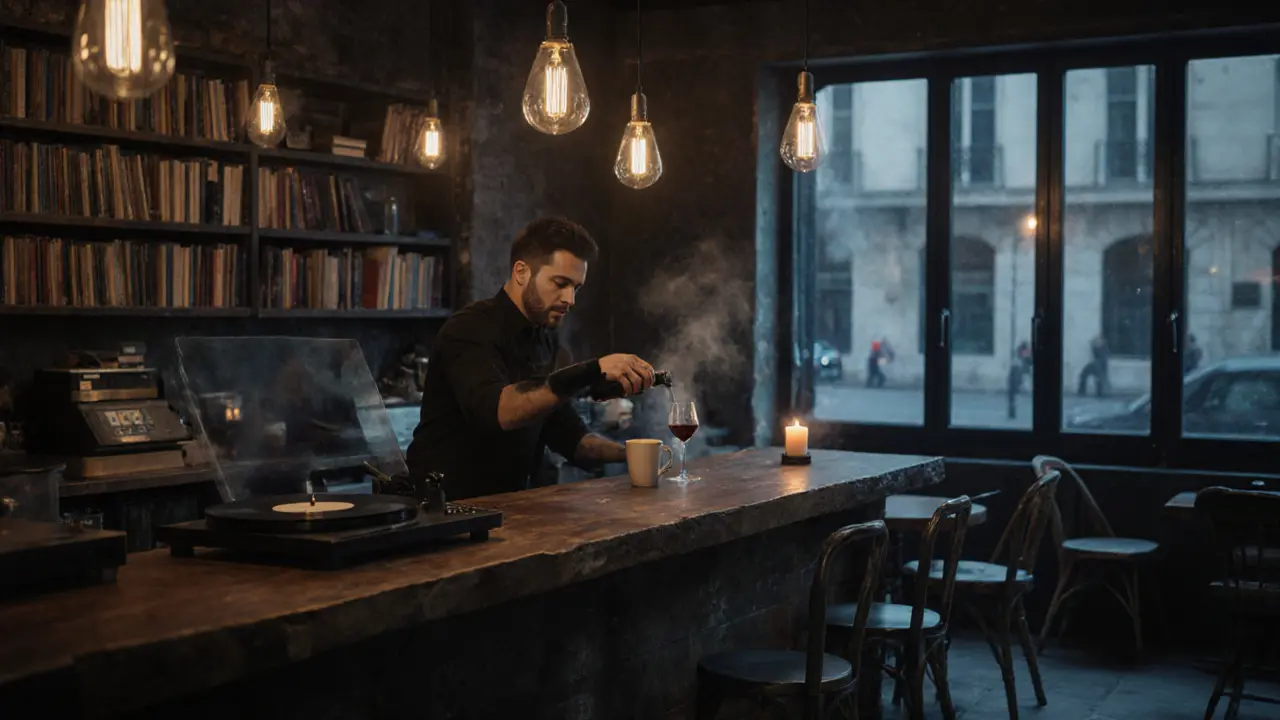
Parisians don’t drink to get drunk. They drink to talk, to linger, to taste. The city’s wine bars are where that philosophy thrives. Forget the tourist traps on the Left Bank. Look for Le Baron Rouge in the 12th, a tiny spot with 30 bottles on the wall, all from small organic producers. The owner pours you a glass, tells you where the grapes were grown, and doesn’t rush you. No menus. Just a chalkboard with the night’s selections.
Try Le Verre Volé in the 10th. It’s been called the best wine bar in Europe by Le Monde-not because it’s fancy, but because it’s real. The staff knows the difference between a 2018 Beaujolais and a 2019 one. They’ll pair it with a wedge of aged goat cheese or a slice of house-made pâté. You sit at the counter. You don’t order a cocktail. You order a story.
The hidden speakeasies and underground scenes
Paris has more speakeasies than you’d expect. Not the gimmicky ones with fake 1920s decor, but real ones. Bar Hemingway at the Ritz is technically a hotel bar, but locals know it’s a sanctuary. No photos. No loud music. Just a perfect Negroni, served by a man who’s been mixing them since 1989.
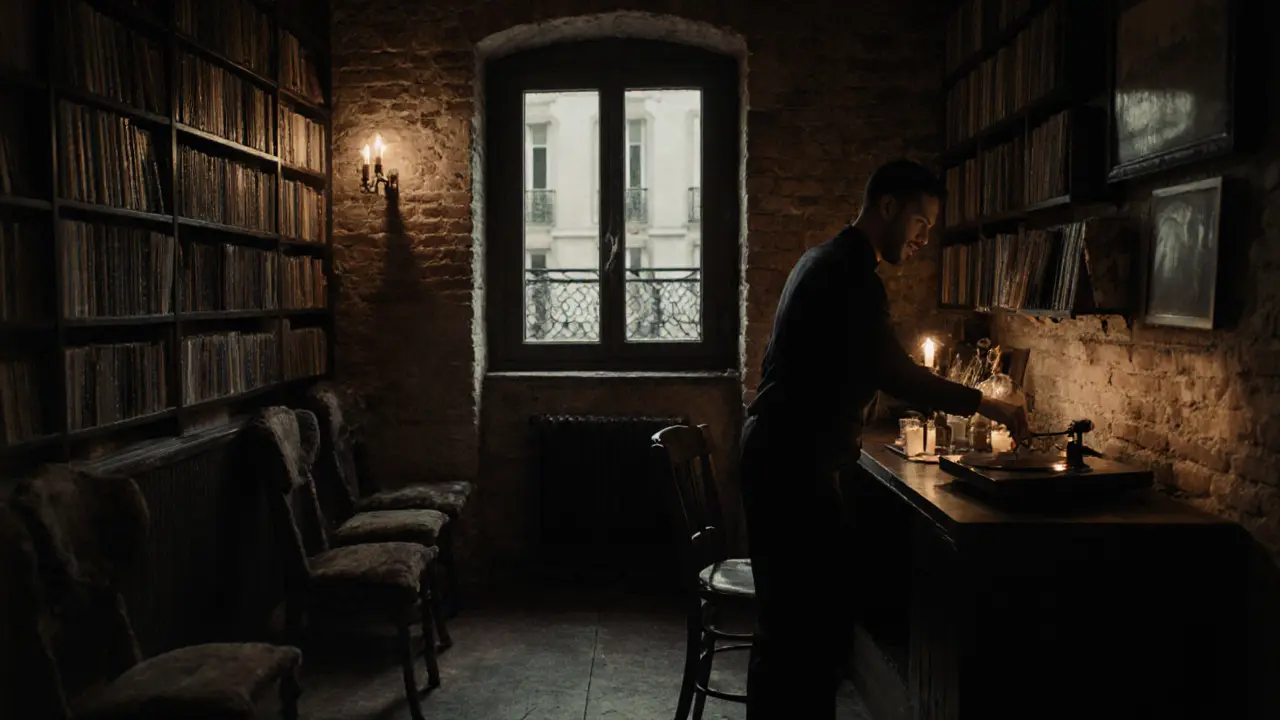
Then there’s Le Chien de la Cave, hidden behind a bookshelf in the 11th. You need a password-ask a regular. Inside, it’s like stepping into someone’s basement collection of vinyl, rare books, and mismatched armchairs. Jazz plays softly. The bartender doesn’t ask what you want-he brings you something that fits your mood.
These places don’t advertise. They grow through word of mouth. You find them by asking the right person. The barista at your favorite morning café. The bookseller near Place des Vosges. The taxi driver who knows where the locals go.
What to expect-and what to avoid
Parisian nightlife isn’t loud. It’s not crowded. It’s not designed for Instagram. If you’re looking for EDM festivals or neon-lit dance floors, you’ll be disappointed. The real scene values intimacy over spectacle.
Don’t go to the bars around Châtelet or the Arc de Triomphe after 10 PM. They’re packed with tourists paying €18 for a beer that tastes like tap water. Instead, walk a few blocks into the 13th, 19th, or 20th arrondissements. That’s where the locals live. That’s where the real night begins.
Also, don’t expect 24-hour service. Most places close by 2 or 3 AM. But that’s part of the charm. The night ends with intention. You leave tired, not hungover. Satisfied, not overloaded.
The rhythm of a Parisian night
Here’s how it usually goes: Start at a wine bar at 9 PM. Move to a café for a digestif at 11. Find a jazz club at midnight. End at a late-night snack stand-think crêpes from La Crêperie de Josselin or a warm croissant from Stohrer-at 2 AM. You don’t plan it. You feel it.
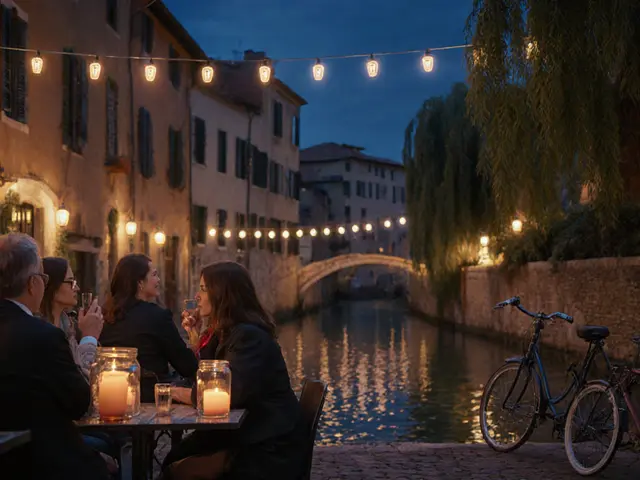
The best nights aren’t the ones you schedule. They’re the ones you stumble into. Maybe you follow the sound of a saxophone drifting from an open door. Maybe you ask a stranger where they go after work. Maybe you just keep walking until you find a place where the lights are dim, the air smells like coffee and old books, and no one looks at their phone.
That’s Parisian nightlife. Not a checklist. Not a tour. Just a feeling you can’t explain until you’ve lived it.
What time do Paris nightclubs close?
Most Parisian bars and clubs close between 2 and 3 AM. Unlike cities with 24-hour party scenes, Paris respects quiet hours. The city enforces noise limits after 2:30 AM, so venues wind down early. Some underground spots may stay open later, but they rarely advertise it. If you want to stay out past 3 AM, your best bet is a 24-hour café like Le Petit Cler in the 6th or a late-night bakery.
Are Parisian cabarets worth visiting today?
Yes-but not for the same reasons as 100 years ago. Moulin Rouge is a polished show, more theater than rebellion. But if you want to see how Parisian nightlife began, it’s still worth it. For something more authentic, try Le Lido or Folies Bergère, both of which blend modern performance with vintage charm. The real value isn’t in the spectacle-it’s in the history. Sitting in those seats, you’re in the same space where artists like Picasso and Modigliani once drank and dreamed.
Can you find good nightlife outside of central Paris?
Absolutely. The 11th, 19th, and 20th arrondissements have some of the most vibrant, authentic scenes. The 11th is known for its wine bars and indie music venues. The 19th has La Bellevilloise, a cultural hub with live music and rooftop views. The 20th is home to Le Très Clam, a cozy bar with excellent cocktails and a loyal local crowd. These areas feel less touristy and more like living neighborhoods. You’ll find Parisians here-not just visitors.
Is Paris nightlife expensive?
It can be, but it doesn’t have to be. In tourist zones, a cocktail can cost €15-20. But in local spots, you can get a glass of natural wine for €7-9, a beer for €5, and a snack for €4. The key is location. Avoid places near major landmarks. Walk a few streets away. Ask for the house wine. Skip the cocktails. Parisian nightlife rewards curiosity, not spending.
What’s the best night of the week for Paris nightlife?
Thursday and Friday are the busiest, but Saturday is when the real magic happens. Many bars host live music or special events on weekends. Jazz nights, vinyl-only parties, and poetry readings often happen on Saturdays. If you want to avoid crowds, go on a Tuesday or Wednesday. The scene is quieter, the staff has more time to talk, and you’ll find better drinks. Some of the best experiences happen on off-nights.