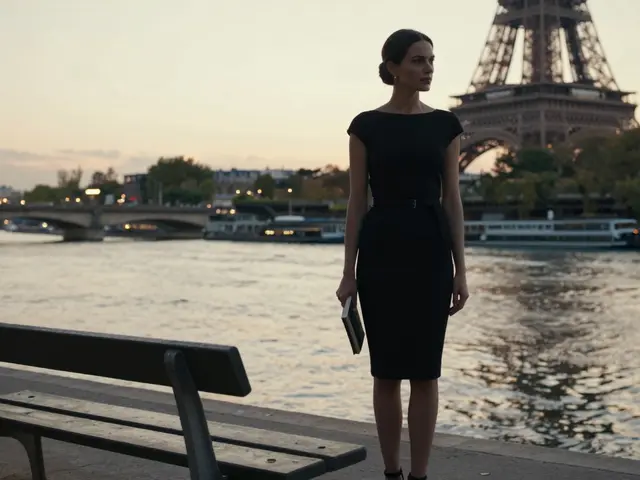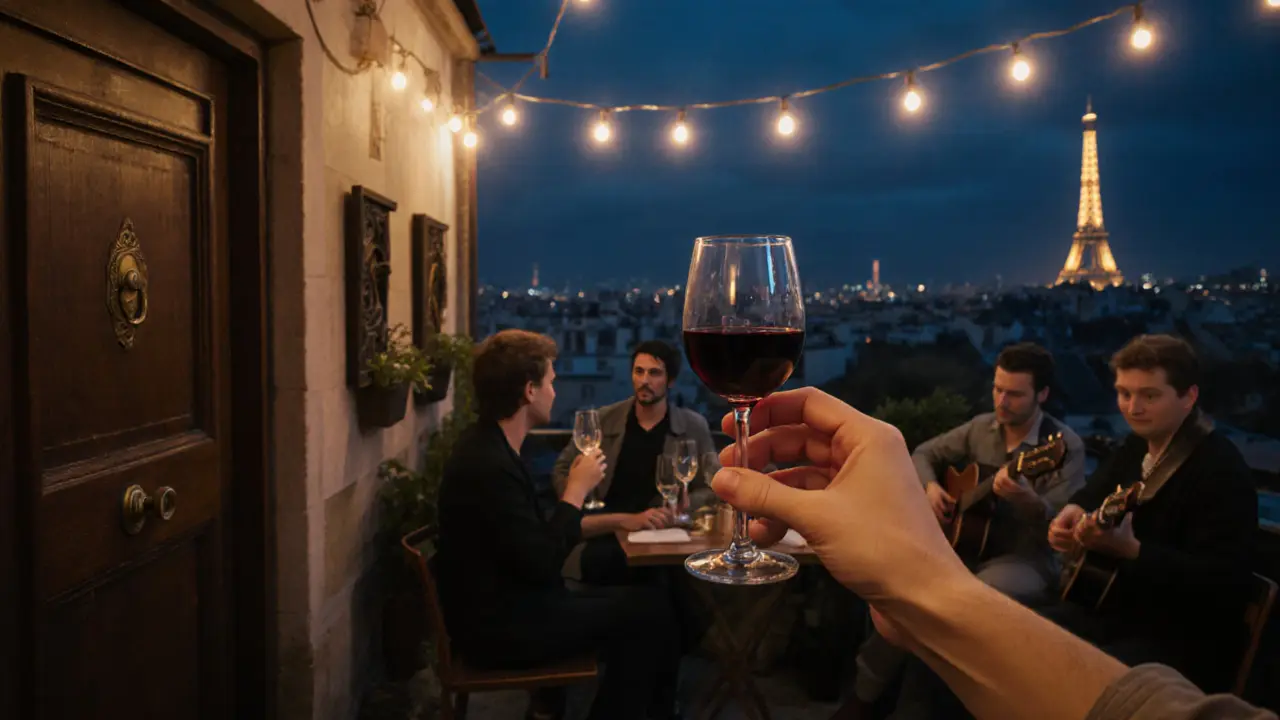
Paris isn’t just about the Eiffel Tower at sunset. When the city lights dim and the crowds thin out, a whole other Paris wakes up-one most tourists never see. The real nightlife here doesn’t shout. It whispers. It’s behind unmarked doors, down narrow alleys, and inside apartments that look like someone’s living room-until the music kicks in and the wine starts flowing. If you’ve only been to the usual spots near Montmartre or Le Marais, you’ve only scratched the surface.
Le Perchoir’s Little Sister: Rooftops Without the Crowds
Everyone knows Le Perchoir. But fewer know about Le Perchoir Marais’s quieter cousin: Le Perchoir Montmartre-no, wait, that’s not it either. The real secret is Le Perchoir du 18, tucked into a courtyard above a bakery on Rue des Martyrs. You won’t find it on Google Maps unless you search for "La Boulangerie du 18" and then look up. The rooftop has no sign. No bouncer. Just a single wooden door with a brass knocker. Inside, locals sip natural wine from recycled glass, listen to jazz trios playing without amplifiers, and watch the city glow from a view you can’t book in advance. No reservations. No dress code. Just show up after 10 p.m. and hope there’s space. It’s been open since 2021, and locals still treat it like a private club.
The Underground Jazz Cellar Under a Bookstore
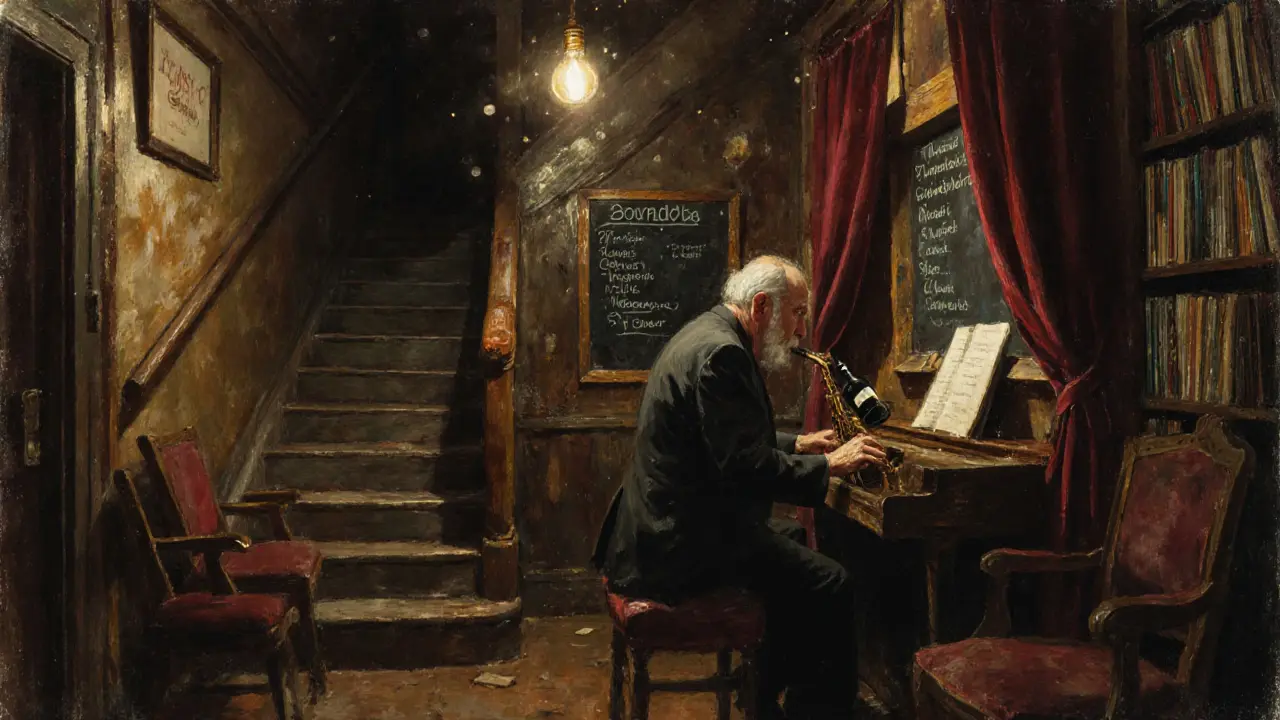
Down a flight of stairs beneath Librairie du Passage in the 6th arrondissement, you’ll find Le Caveau des Ombres. The entrance looks like a storage closet. A single lightbulb hangs over a narrow staircase. At the bottom, you’re greeted by a small room with mismatched armchairs, a bar made from reclaimed wood, and a wall of vinyl records. The music? Live jazz every night, but never the same band twice. Musicians come from Brussels, Lyon, and even New Orleans. The owner, a retired saxophonist named Henri, only books artists he’s met in person. You might hear a 72-year-old pianist from Senegal playing a Bill Evans tune with a West African rhythm. No menus. You order wine from a chalkboard. Prices haven’t changed since 2019: €8 for a glass of natural red, €12 for a bottle of biodynamic champagne. The place doesn’t take cards. Cash only. And if you ask for a cocktail, they’ll laugh and hand you a glass of absinthe instead.
The Midnight Diner That Only Opens After 2 a.m.
Most Parisians don’t eat dinner until 9 p.m. But the ones who stay out past 2 a.m. know about Le Petit Dîner-a 12-seat counter in the 13th arrondissement that only opens when the last metro train leaves. The owner, a former chef from Lyon, runs it alone. He arrives at 1 a.m., turns on the stove, and waits. There’s no website. No Instagram. Just a handwritten note taped to the door: "Ouvert après le dernier métro." The menu changes daily based on what he finds at the market that morning. One night, it’s duck confit with caramelized figs. Another, it’s buckwheat crepes with smoked trout and crème fraîche. You sit at the counter, watch him cook, and talk. He doesn’t speak English. But he’ll pour you a glass of Beaujolais and point to the dish he made for his mother. The bill? €25 for three courses. No tip expected. No receipts given.
The Secret Karaoke Room in a Laundry Shop
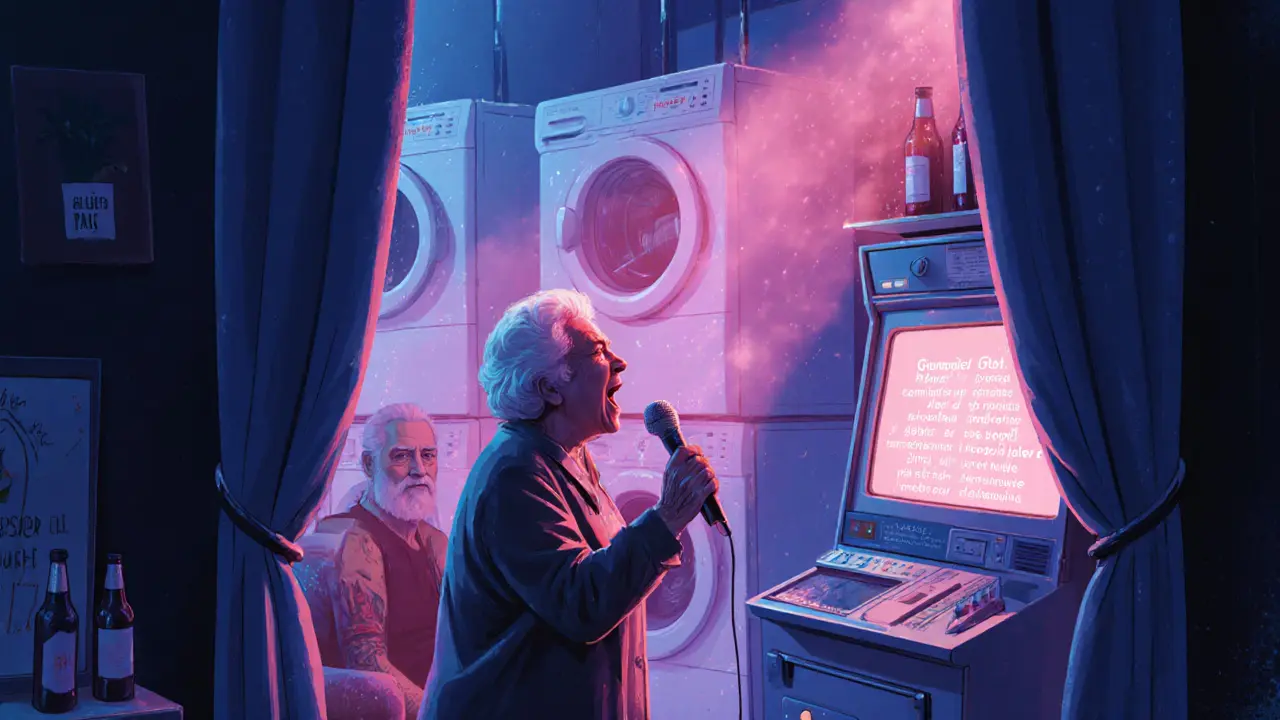
On a quiet street in Belleville, there’s a laundry shop called La Blanchisserie. It looks like any other-washing machines humming, detergent bottles lined up, a sign in French that says "Lavage Express." But if you knock three times on the back door after 11 p.m., a woman in an apron will let you in. Behind a curtain is a tiny room with a karaoke machine, a couch, and a fridge full of local beer. No one takes your name. No one asks how many people you are. You pay €10 per hour. The machine has 2,000 songs-all in French, all from the 70s to the 90s. You’ll sing Bérénice Bejo, Serge Gainsbourg, or Zaz. The regulars? A retired librarian, a tattoo artist from Marseille, and a 70-year-old grandmother who sings Edith Piaf better than anyone. You won’t find this on TikTok. You won’t see it on YouTube. But if you’re lucky, you’ll hear her sing "Non, Je Ne Regrette Rien" while the steam from the washing machines fills the room.
The Rooftop Cinema That Only Shows Silent Films
Every Friday night in July and August, a rooftop in the 11th arrondissement turns into a silent film theater. No one advertises it. The location changes each year. You get the address via a text message sent to your phone if you’ve signed up at the local cinema in the past three years. The screen? A white sheet hung between two balconies. The projector? A 1950s Bell & Howell. The films? Silent classics-Chaplin, Keaton, Gance-with live piano accompaniment by a musician who plays by ear. No subtitles. No intermission. Just popcorn made with duck fat, served in paper cones. The crowd? Mostly French, mostly under 35, mostly people who grew up watching these films with their grandparents. You bring your own blanket. You sit on the roof under the stars. No phones allowed. After the film ends, the owner pours everyone a glass of sparkling wine and says, "Merci d’être venus. On se revoit l’année prochaine."
Why These Places Still Exist
These spots survive because they’re not businesses. They’re rituals. They’re not trying to be trendy. They don’t need Instagram likes. They don’t want tourists. They want people who show up because they’re curious, not because they’re打卡. Paris has spent decades pushing out its underground culture with rent hikes, noise ordinances, and tourist crackdowns. But some places refuse to change. They stay small. They stay quiet. They stay real.
These aren’t the places you’ll read about in travel blogs. They’re not in the Michelin Guide. They’re not even listed on TripAdvisor. But if you want to understand what Paris nightlife really is, you need to find them. Not by searching. Not by asking. But by wandering. By getting lost. By listening.
How to Find Them
You won’t find these places with a Google search. Here’s how locals do it:
- Go to a local boulangerie before 8 a.m. and ask the baker where they go after work.
- Visit a used bookstore and strike up a conversation with the owner. Ask what music they’re listening to.
- Walk into a wine bar at 10 p.m. and order a glass of natural wine. Say, "Où allez-vous après ça?" (Where do you go after this?)
- Don’t look for signs. Look for people. If a group of locals is laughing quietly in a doorway, stand there for a minute. Someone will notice you.
- Carry cash. Always. These places don’t take cards.
And if you’re lucky? Someone will say, "Viens avec moi. Je te montre."
Are these secret nightlife spots safe?
Yes, but only if you respect them. These places aren’t dangerous-they’re just not designed for outsiders. Don’t take photos. Don’t ask for a menu. Don’t try to book a table. Don’t bring a large group. Locals know these spots because they’ve earned the trust of the owners. If you act like a tourist, you’ll be politely asked to leave. If you act like a guest, you’ll be welcomed.
Can I find these places on Google Maps or Instagram?
No. Most of these places don’t have official pages. Some have fake listings created by tourists. The real ones rely on word of mouth. If you see a post on Instagram claiming to show "the hidden bar of Paris," it’s probably not real. The real spots don’t want to be found that way.
What’s the best time to visit these secret spots?
After 10 p.m. is the sweet spot. Most open between 10 p.m. and midnight. Some, like the midnight diner, don’t open until after 2 a.m. Weeknights are better than weekends-there’s less chance of crowds, and the regulars are more likely to be there. Avoid Friday and Saturday nights if you want the real experience.
Do I need to speak French?
You don’t need to be fluent, but knowing basic phrases helps. A simple "Bonjour," "Merci," and "Où allez-vous après ça?" will get you further than any translation app. Many owners don’t speak English. But they understand when someone is trying.
Are these places expensive?
Not at all. Most charge €8-€15 for drinks and €20-€30 for food. That’s less than a coffee in many tourist areas. The value isn’t in the price-it’s in the experience. You’re not paying for a branded cocktail. You’re paying for a moment that won’t be replicated.
What to Do Next
Don’t plan your night around these spots. Plan your night around wandering. Start in the 11th or 13th arrondissement-areas less flooded with tourists. Walk without a map. Stop at a small wine bar. Ask the bartender where they go after closing. Listen. Watch. Wait. The next secret might be just one conversation away.