Most tourists leave Milan by 9 p.m., thinking the city shuts down after dinner. But if you stick around past midnight, you’ll find a pulse that doesn’t show up on any guidebook map. Milan’s nightlife isn’t about glittering clubs and VIP lines-it’s about tucked-away wine bars, jazz basements, and rooftop terraces where locals sip Aperol and talk until sunrise. This isn’t the Milan of fashion shows and luxury boutiques. This is the real one. The one that wakes up when the sun goes down.
The Navigli District: Where the Canals Come Alive
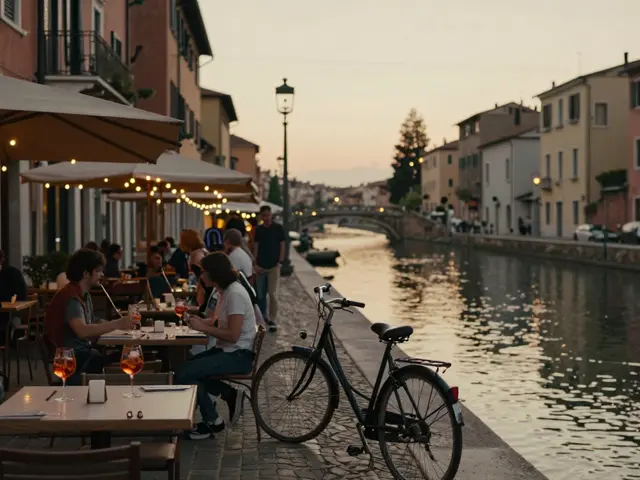
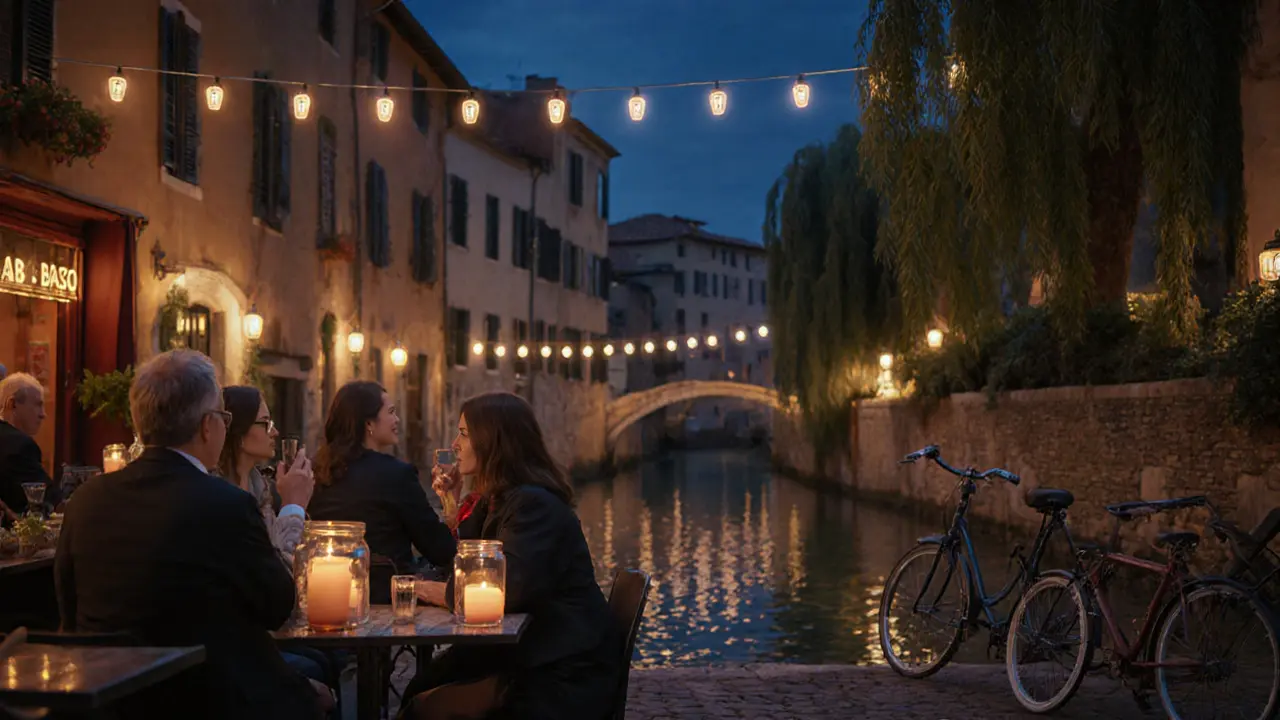
Start in Navigli. It’s the oldest canal district in Milan, and by 10 p.m., the water reflects the warm glow of string lights and flickering candles. This isn’t a tourist trap-it’s where Milanese come to unwind after work. Head to Bar Basso, the birthplace of the Negroni Sbagliato. The bar’s been around since 1952, and the same bartender still pours it the same way: gin, vermouth, and a splash of Prosecco, stirred slowly, never shaken. Order one. Watch how the locals don’t rush. They sip, they laugh, they lean back.
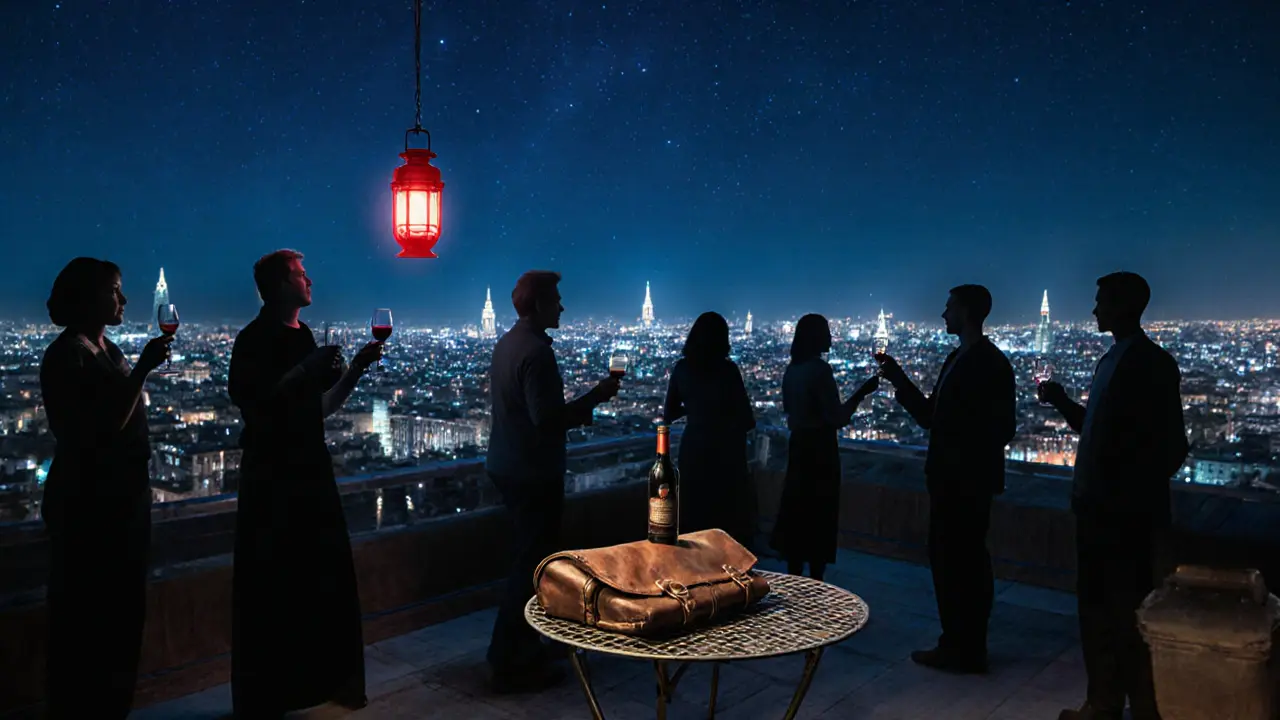
Walk down Via Tortona after midnight. The warehouses here have turned into pop-up bars with no signs. One night, you’ll find a vinyl-only DJ spinning 70s funk in a converted printing press. The next, it’s a cocktail lab where bartenders infuse gin with local herbs. No menu. Just ask what’s fresh. They’ll hand you a glass with a sprig of rosemary and a hint of wild fennel. No name on the door. Just a single red lantern hanging above the step.
Brera: Jazz, Whiskey, and Quiet Corners
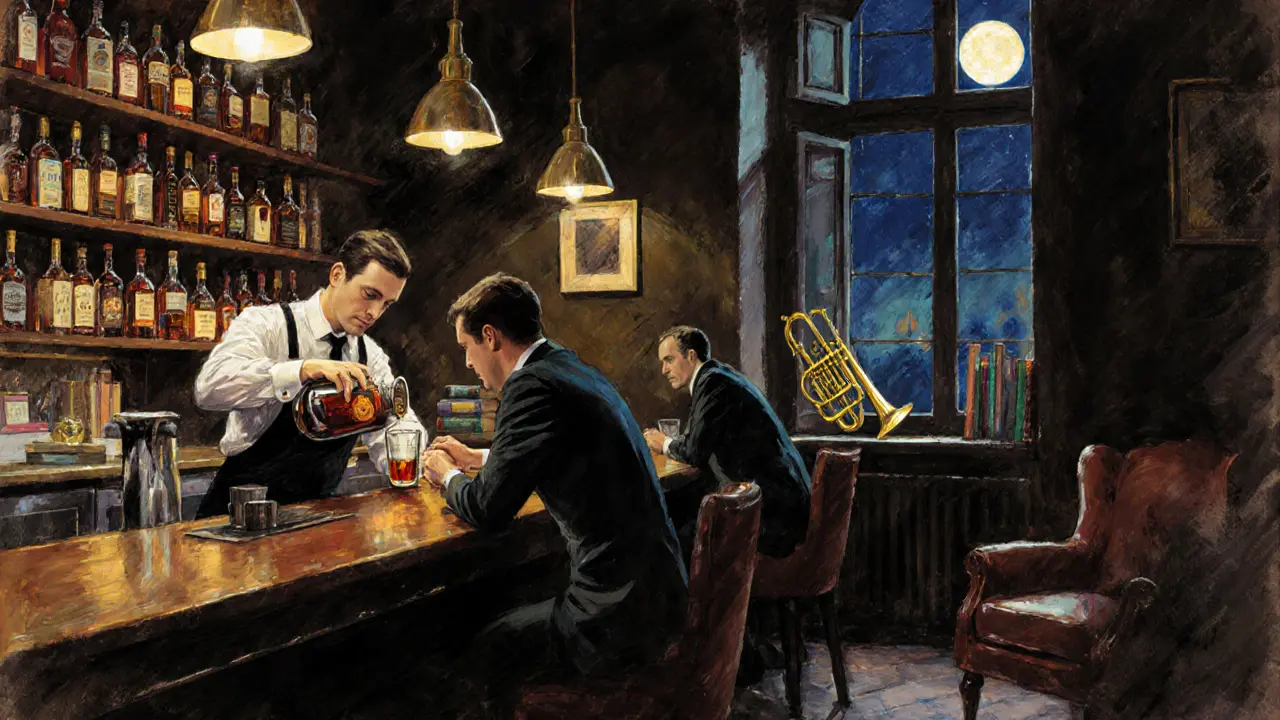
Brera feels like a secret you weren’t supposed to know. Cobblestone streets, art galleries shuttered for the night, and tiny bars that feel like someone’s living room. Bar Basso has its rival here in Il Gatto Nero. It’s dark, cramped, and smells like old books and bourbon. The owner, Marco, doesn’t take reservations. He just nods you in if he sees you’re serious. His whiskey collection? Over 120 bottles, all single malts from Scotland and Japan. He’ll pour you a 20-year-old Glenfiddich without asking how much you’re willing to pay. If you ask why, he’ll say, “Because you didn’t flinch when I said it was $80.”
On Friday nights, head to La Bussola, a basement jazz club under a 17th-century chapel. No stage. No spotlight. Just a trio-piano, double bass, trumpet-playing in the corner. You stand shoulder-to-shoulder with professors, architects, and retired opera singers. No one claps too loud. No one takes photos. You just listen. And when the last note fades, someone whispers, “Bravo,” and the night keeps going.
Porta Ticinese: From Underground to Rooftop
Porta Ticinese is where Milan’s youth lives. It’s gritty, loud, and alive. By 1 a.m., the street is packed with people spilling out of bars with names like La Baita and Stazione della Speranza. These aren’t clubs. They’re scenes. One night, it’s a punk band playing in a garage with a sign that says “No Cover, No Rules.” The next, it’s a silent disco where everyone wears headphones and dances like nobody’s watching-even though everyone is.
But the real gem is Terrazza 360, a rooftop bar on the 10th floor of an old industrial building. You need to know the password to get in. Text the number on the door at 11:30 p.m. and you’ll get a reply: “Ciao, bring your own glass.” That’s it. No bouncer. No dress code. Just a 360-degree view of Milan’s skyline, a bottle of Lambrusco, and a plate of cured meats. The view? Free. The vibe? Priceless.
Where the Locals Go After Midnight
Most tourists think the party ends at 2 a.m. But in Milan, the real night starts then. Around 3 a.m., head to Bar Campari in the Porta Venezia neighborhood. It’s open 24 hours, but only locals know why. The coffee here is strong enough to wake up a dead man. The pastries are still warm. And the guy behind the counter? He’s been here since 1978. He doesn’t take credit cards. Cash only. He’ll ask you how your day was. Then he’ll tell you where the real after-hours spot is.
That spot? La Tana del Lupo, a speakeasy hidden behind a bookshelf in a used bookstore. You need to find the third edition of “The Great Gatsby” on the top shelf. Pull it out. The shelf slides open. Inside, it’s dim, quiet, and full of people who’ve been here since the 90s. No music. Just a record player playing Ennio Morricone. One bottle of Barolo. Two glasses. And silence. That’s the Milanese way-nightlife isn’t about noise. It’s about presence.
What to Avoid
Don’t go to the big clubs on Corso Como unless you want to pay €50 for a drink and stand in a crowd of people who came for the Instagram post, not the music. The same goes for “trendy” rooftop bars that charge €120 for entry. Those aren’t for locals. They’re for influencers. You’ll pay more, see less, and leave feeling empty.
Also, skip the night buses after 2 a.m. They’re slow, overcrowded, and rarely go where you need to be. Instead, walk. Milan is safe at night. The streets are lit. People are out. And if you get lost? Ask someone. They’ll point you to the nearest bar and buy you a drink.
How to Blend In
Wear something simple. Dark jeans. A button-down. No sneakers. No hoodies. Milanese dress like they’re going to a gallery opening-even at 3 a.m. You don’t need to look rich. Just look intentional.
Don’t order a vodka soda. Don’t ask for a “happy hour.” Don’t say “I’m here for the nightlife.” Say instead, “What’s good tonight?” Then listen. The bartender will tell you the truth.
And don’t rush. Milan’s nightlife doesn’t operate on a schedule. It moves with the conversation. If someone invites you to join them at another place, say yes. Even if you’re tired. Even if you think you’ve seen it all. You haven’t.
When to Go
Weekends are crowded, but Thursday and Friday nights are where the magic happens. Bars open earlier. The crowd is looser. The music is better. And the bartenders? They’ve had time to warm up. If you want to experience Milan’s real nightlife, come midweek. You’ll get the best seats, the best drinks, and the best stories.
Final Tip: Leave Your Phone in Your Pocket
The best moments won’t be on your camera roll. They’ll be the quiet ones-the shared silence over a glass of wine, the laugh that comes out of nowhere, the stranger who becomes a friend because you both liked the same song. Milan doesn’t want you to document it. It wants you to live it.
What time do Milan bars actually close?
Most bars in Milan close between 2 a.m. and 3 a.m., but the real after-hours spots like Bar Campari and La Tana del Lupo stay open until dawn. Some even serve coffee and pastries at 5 a.m. If you’re still going at 4 a.m., you’re doing it right.
Is Milan nightlife safe at night?
Yes. Milan is one of the safest major European cities after dark. The streets are well-lit, police patrols are common, and locals are protective of their neighborhoods. Avoid poorly lit alleys near train stations, but the main nightlife districts-Navigli, Brera, Porta Ticinese-are perfectly safe. Just use common sense.
Do I need to make reservations for Milan nightlife spots?
For most places? No. The best bars don’t take reservations-they fill up organically. If you show up at 10 p.m., you’ll get a table. If you wait until midnight, you might have to stand. The only exceptions are rooftop spots like Terrazza 360, where you text for entry, and jazz clubs like La Bussola, which fill up fast on weekends. Even then, you don’t need to book weeks ahead.
How much should I budget for a night out in Milan?
You can have a full night out for €30-€50. A drink at a local bar costs €8-€12. A cocktail at a speakeasy might be €15. Food like cicchetti or panzerotti runs €5-€10. Skip the €25 cocktails and €100 entry fees. Stick to the hidden spots, and you’ll get better drinks, better company, and way more soul.
Are there any dress codes in Milan nightlife?
There’s no strict dress code, but Milanese people dress with care. Think smart casual: dark jeans, a nice shirt, leather shoes or clean boots. No shorts, flip-flops, or sportswear. You don’t need a suit, but you should look like you put in effort. It’s not about wealth-it’s about respect for the space and the people.